
How to Freeze Asparagus Without Blanching
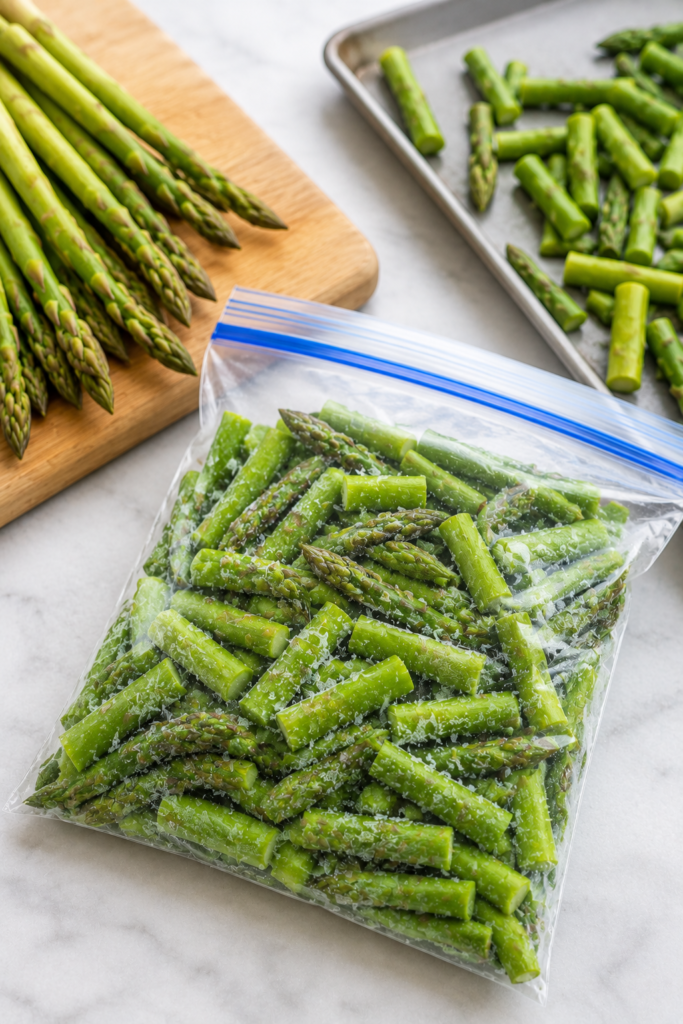
Fresh asparagus is a seasonal favorite, but its short shelf life can make it difficult to enjoy beyond a few days. Fortunately, freezing asparagus without blanching is a simple and effective way to preserve it for later use. This method skips the traditional boiling step, making it faster and more convenient while still allowing you to store asparagus for months.
This guide will walk you through how to freeze asparagus without blanching, with clear step-by-step instructions and detailed storage tips to help you get the best results.
Can You Freeze Asparagus Without Blanching?
Yes, you can freeze asparagus without blanching. While blanching helps maintain color and texture, it is not essential if you plan to use the asparagus in cooked dishes later.
Freezing asparagus raw is a practical option when you want to save time. However, keep in mind that the texture may become slightly softer after freezing and thawing. This makes it best suited for recipes where the asparagus will be cooked.
Why Choose the No-Blanch Method?
Freezing asparagus without blanching offers several advantages:
- It saves time by eliminating the boiling and cooling steps
- It requires minimal equipment and cleanup
- It preserves the natural flavor of the asparagus
- It works well for meal prep and batch storage
- It is ideal for use in cooked dishes
Although the texture may not remain as firm as blanched asparagus, the convenience often outweighs this difference.
How to Freeze Asparagus Without Blanching
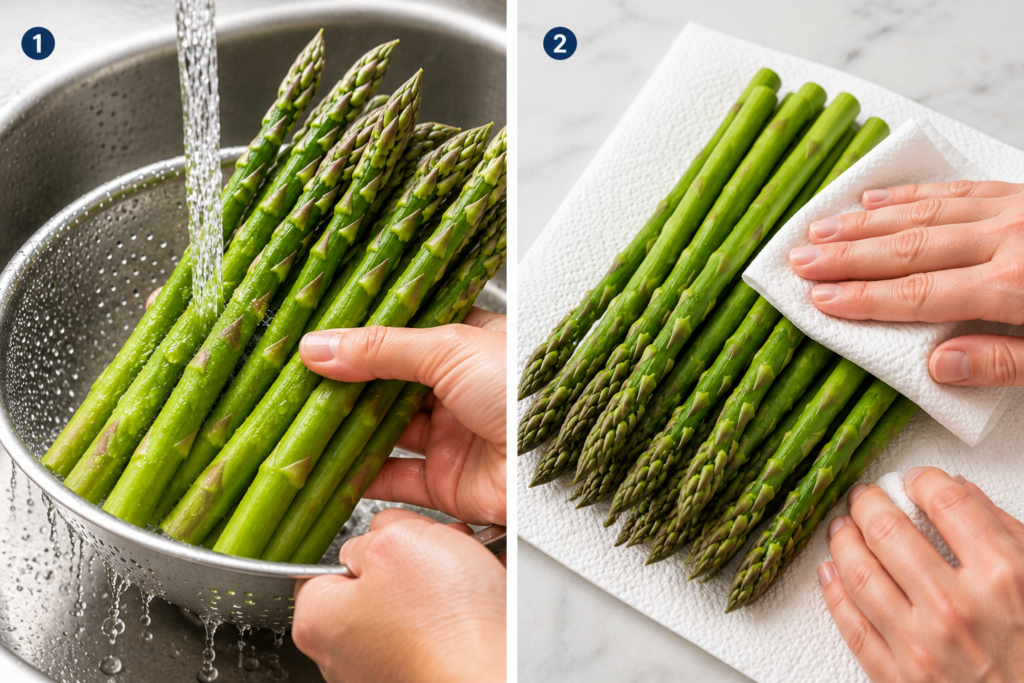
Step 1: Clean the Asparagus
Start by rinsing the asparagus thoroughly under cold running water. Gently rub the stalks with your hands to remove any dirt or sand that may be stuck to them. This step is important because any debris left on the asparagus will freeze along with it and affect the taste and texture later.
Step 2: Dry the Asparagus Completely
After washing, make sure the asparagus is completely dry. You can pat it dry with paper towels or spread it out on a clean towel and let it air dry. Removing moisture is essential because excess water can turn into ice crystals in the freezer, which can damage the texture and cause freezer burn.
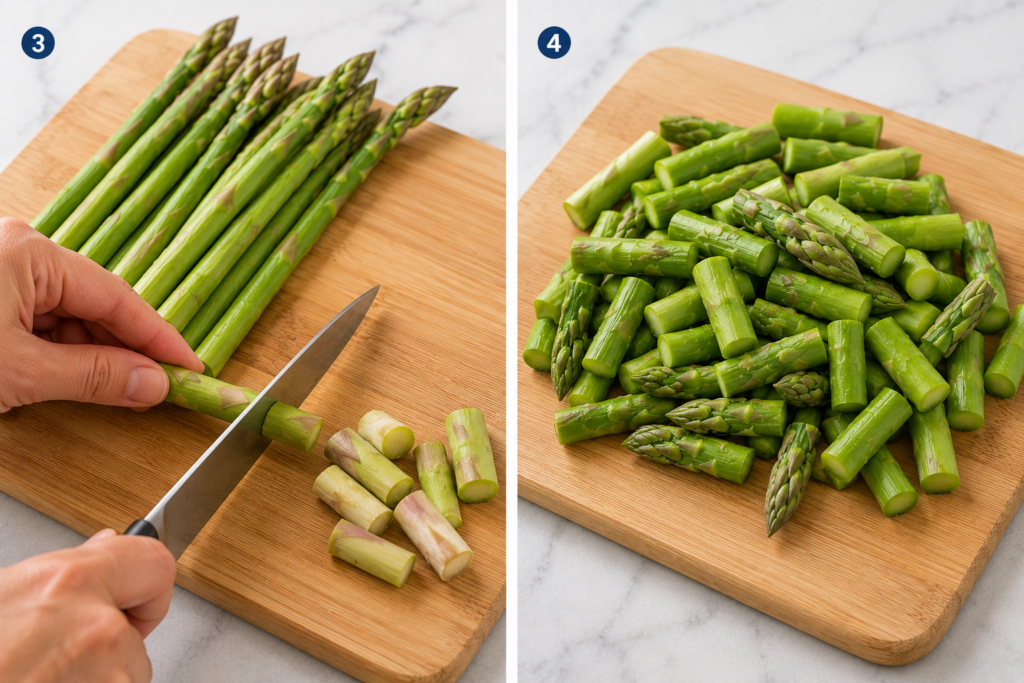
Step 3: Trim the Ends
Cut or snap off the tough, woody ends of the asparagus. These ends are fibrous and not pleasant to eat, even after cooking. To find where to trim, bend a spear gently—it will naturally snap at the point where the tender part begins.
Step 4: Prepare the Asparagus for Freezing
Decide how you plan to use the asparagus later. If you want convenience, cut the spears into 1 to 2-inch pieces so they are ready to use in recipes. If you prefer, you can leave them whole for roasting or grilling. Preparing them now saves time when cooking later.
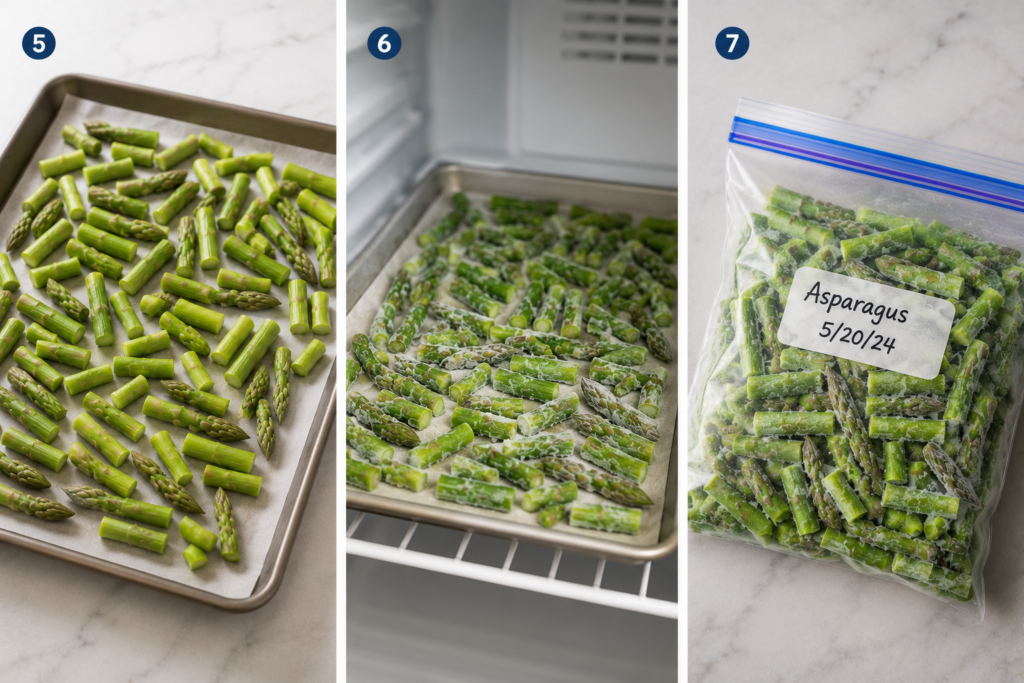
Step 5: Freeze in a Single Layer (Flash Freeze)
Place the asparagus pieces in a single layer on a baking sheet. Make sure they are not touching each other. This step is called flash freezing, and it prevents the pieces from sticking together into one large clump.
Put the tray in the freezer for about 2 to 3 hours, or until the asparagus is completely frozen solid. This ensures each piece stays separate and easy to portion later.
Step 6: Store Properly
Once the asparagus is frozen, transfer it into freezer-safe bags or airtight containers. Press out as much air as possible before sealing the bags. Removing air helps prevent freezer burn and keeps the asparagus tasting fresh.
Label each bag or container with the date so you know how long it has been stored.
Step 7: Keep Frozen Until Use
Place the sealed bags back into the freezer. Keep them stored at a consistent temperature. For best quality, use the asparagus within 8 to 10 months.
How to Use Frozen Asparagus
Frozen asparagus that has not been blanched is best used in cooked dishes. You can add it directly from the freezer without thawing, which helps maintain its texture.
Common uses include:
- Stir-fries
- Soups and stews
- Pasta dishes
- Casseroles
- Roasted vegetable mixes
- Omelets and quiches
Because the texture softens slightly, it works best in recipes where crispness is not essential.
Storage Tips for Best Results
To keep your frozen asparagus fresh and flavorful, follow these detailed storage tips:
- Use portion-sized bags: Divide asparagus into amounts you typically use in one meal. This prevents repeated opening and exposure to air.
- Remove as much air as possible: Air causes freezer burn. Use freezer bags and press out air, or use a vacuum sealer if available.
- Keep a consistent freezer temperature: Store at 0°F (-18°C) or lower. Fluctuating temperatures can affect quality.
- Avoid overcrowding the freezer: Good air circulation helps maintain even freezing.
- Label everything clearly: Always write the date so you can use older batches first.
- Do not refreeze thawed asparagus: Refreezing can worsen texture and reduce quality.
- Store in the coldest part of the freezer: Avoid placing bags in the door where temperatures fluctuate more.
Following these tips will help preserve flavor, reduce ice crystal formation, and extend the shelf life of your asparagus.
Frequently Asked Questions
Can asparagus be frozen raw?
Yes, asparagus can be frozen raw. Simply clean, dry, trim, and freeze it using the flash-freezing method before storing.
Is blanching necessary before freezing asparagus?
Blanching is recommended for preserving texture and color, but it is not required if you plan to cook the asparagus after freezing.
How long can frozen asparagus be stored?
For the best quality, frozen asparagus should be used within 8 to 10 months.
Should frozen asparagus be thawed before cooking?
In most cases, no. It can be added directly to dishes such as soups, stir-fries, or casseroles without thawing.
Final Thoughts
Freezing asparagus without blanching is a quick and practical way to extend its shelf life. While the texture may be slightly softer compared to blanched asparagus, it remains a great option for a wide range of cooked meals. By following these clearly explained steps and proper storage tips, you can preserve fresh asparagus and enjoy it long after the season has passed.